Fresh Concrete Apron Poured for a Commercial Building in Corcoran
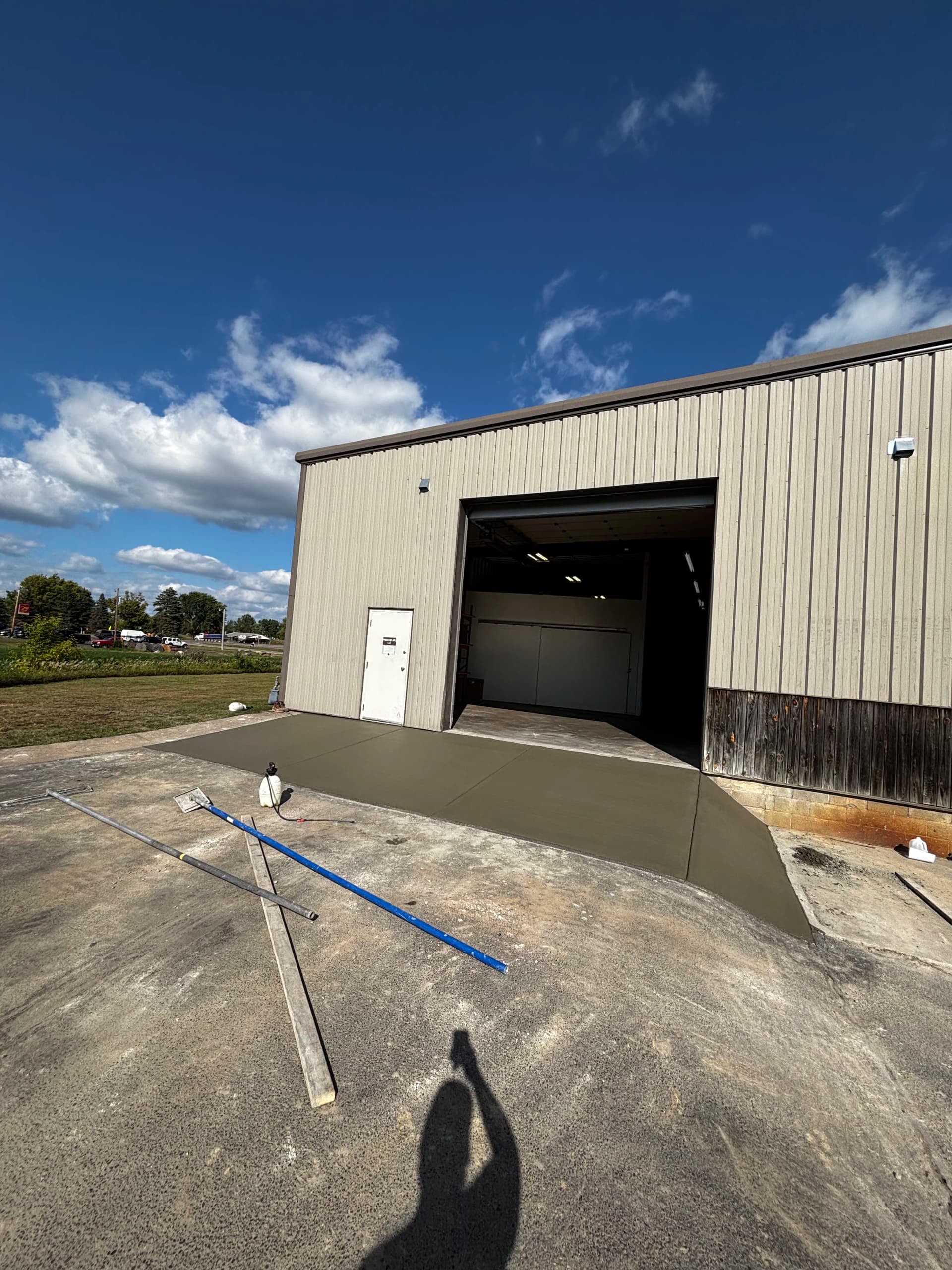
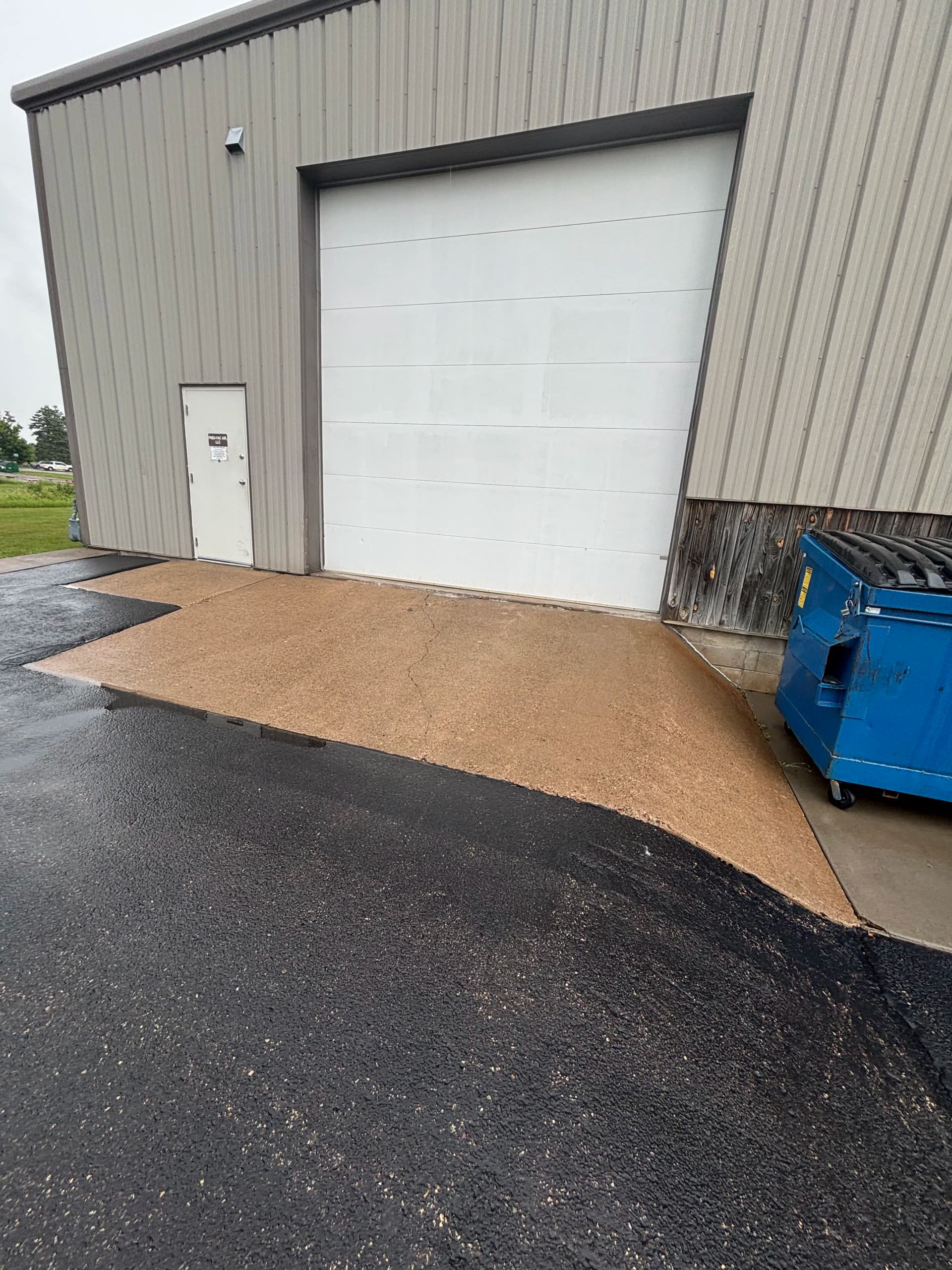
Here's what we were working with - a worn, deteriorating concrete apron at the entrance of a commercial building. Cracked, crumbling edges, rough surface. Not exactly what you want vehicles rolling over day in and day out. It needed to go.
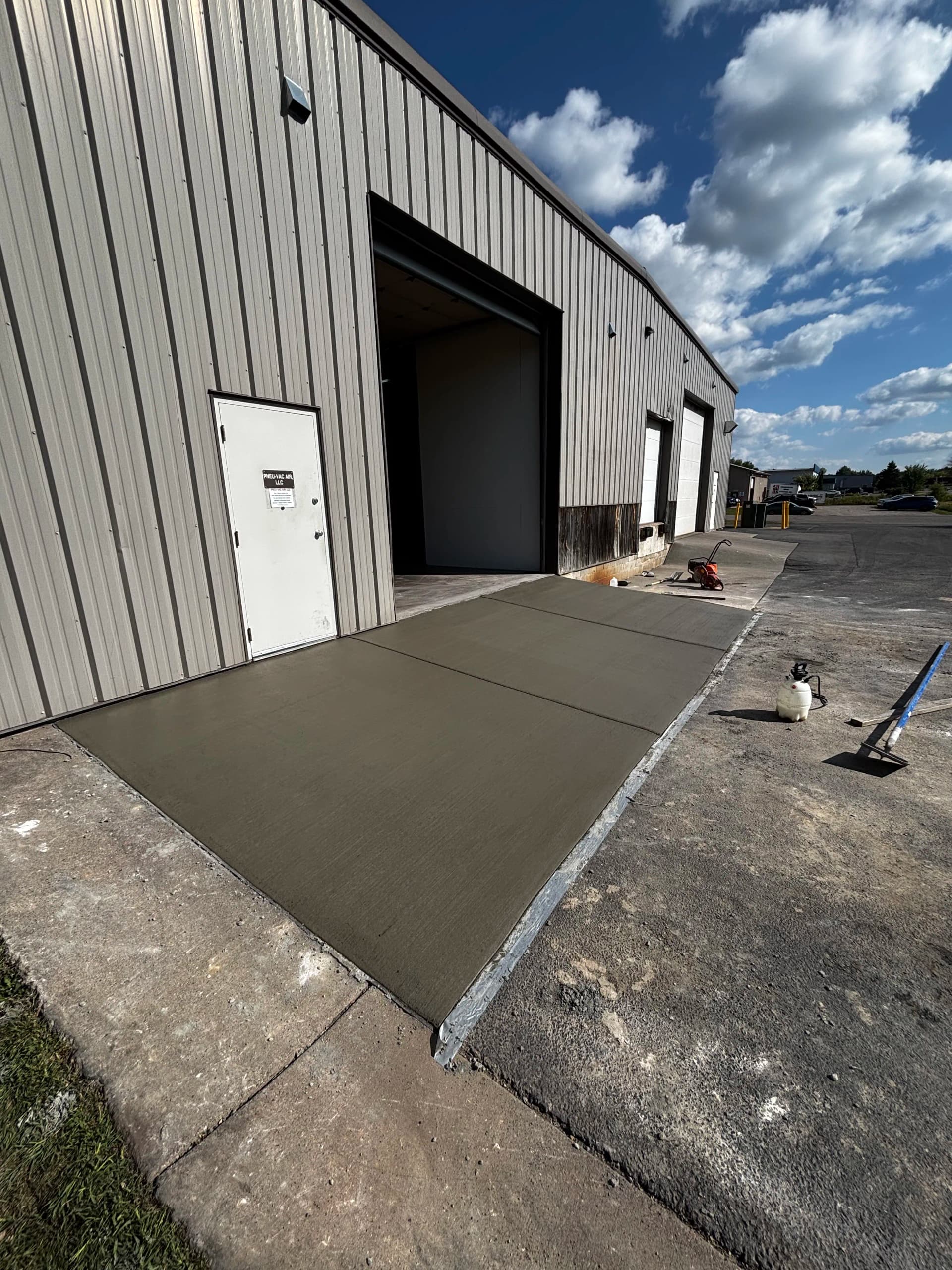
We pulled it out and started fresh. Seven inches thick with rebar grids on 2-foot centers. That's not an apron built to last a few years - that's built to handle serious daily load without shifting, cracking, or settling. The base prep underneath matters just as much as what's on top, and we made sure both were done right.
The finish came out clean and smooth. Nice, consistent surface with control joints cut in to manage where any future cracking wants to go - keeping it predictable and contained. The transition from the existing asphalt up to the building entrance sits flush and solid.
A lot of aprons we see were either poured too thin or skipped the rebar entirely. That's why they fail. When you're driving vehicles and equipment over a surface repeatedly, the concrete has to be engineered for that - not just thrown down and hoped for the best. We don't cut corners on the stuff that's buried where nobody can see it, because that's exactly what determines how long it lasts.
This one in Corcoran turned out sharp, and the owner's got an entrance they won't have to think about for a long time. That's the goal every time we pour.